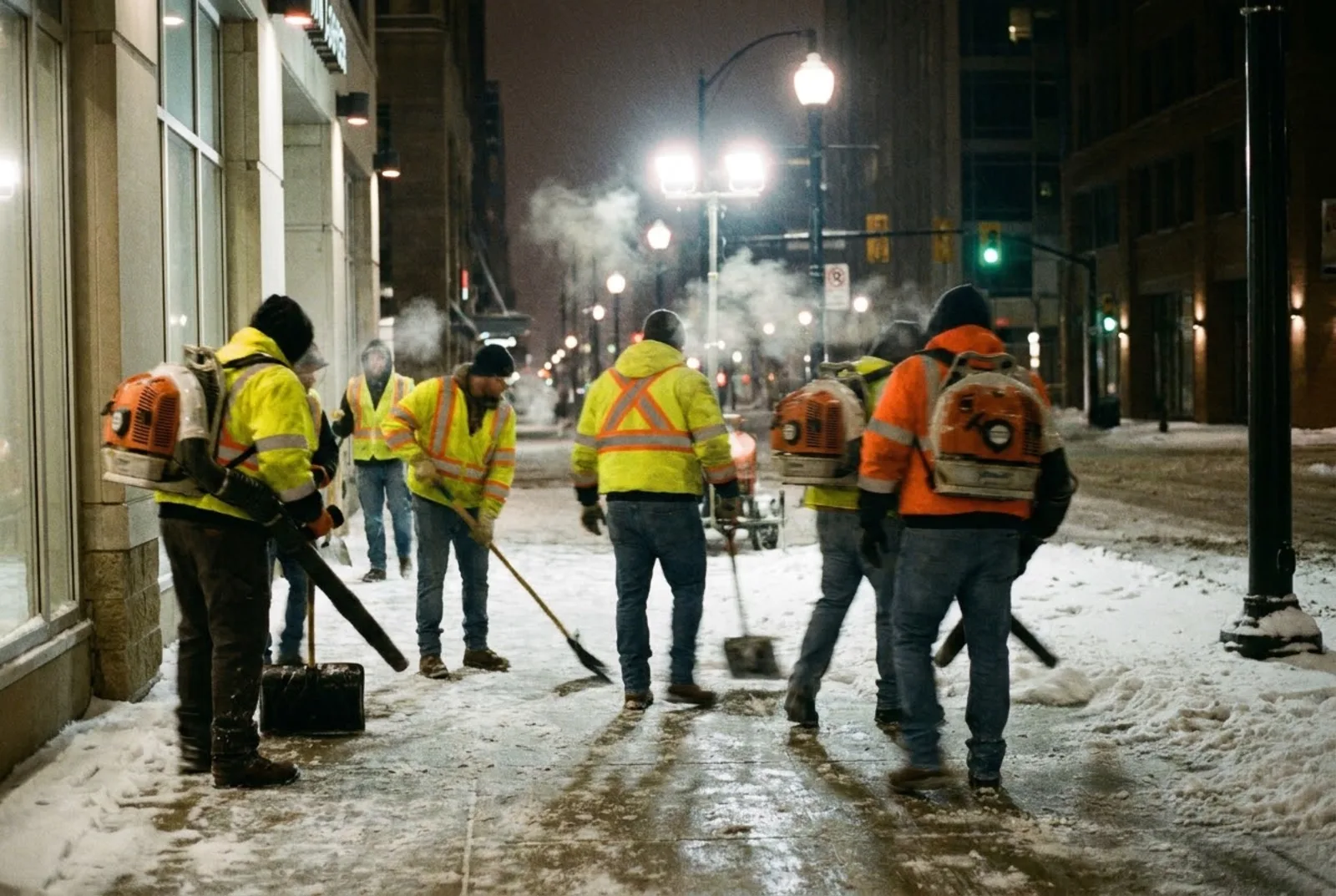
The Injuries This Trade Actually Files
Snow removal claims cluster tightly, which means they are largely preventable and entirely foreseeable to an underwriter.
- Slips on ice — the crew is on the most dangerous surface on the property, on purpose, in the dark
- Back and shoulder strains — wet snow is heavy and shovel work is repetitive at speed
- Cold stress — frostbite and hypothermia on long overnight shifts, particularly for sidewalk crews
- Struck-by — a crew member on foot near a reversing plow truck in low visibility
- Fatigue-related — hour eighteen of a storm event is where the serious injuries happen
Fatigue is the exposure underwriters ask about
A 30-hour storm push is normal in this trade and terrible for loss experience. Written shift limits, mandatory rotations and a documented rest policy are the cheapest safety controls you can put in place, and they read well at renewal.
Subcontractors and the Payroll Audit
This is the single most expensive surprise in the trade. If you use subcontractors and cannot produce a valid certificate of insurance for each one, the auditor will treat what you paid them as your payroll and charge you premium on it. A busy winter of subbed-out routes can turn into a five-figure audit bill in April.
- Collect a certificate of insurance from every sub before they run a single route
- Check the policy dates cover the whole season, not just the week they sent it
- Keep the certificates filed for the audit — the auditor wants documents, not assurances
- Re-collect when a policy renews mid-season, which is when most certificates go stale
Seasonal Payroll and Classification
Winter-only payroll can be handled without paying for a full year of exposure you never had. Classification matters too: snow removal, landscaping and general labour carry different rates, and being placed in the wrong class code either overcharges you all season or unravels at audit.
Report payroll honestly and promptly. Under-reporting to lower the deposit does not save money — the audit finds it, and it arrives as one bill in spring when cash flow is at its worst.