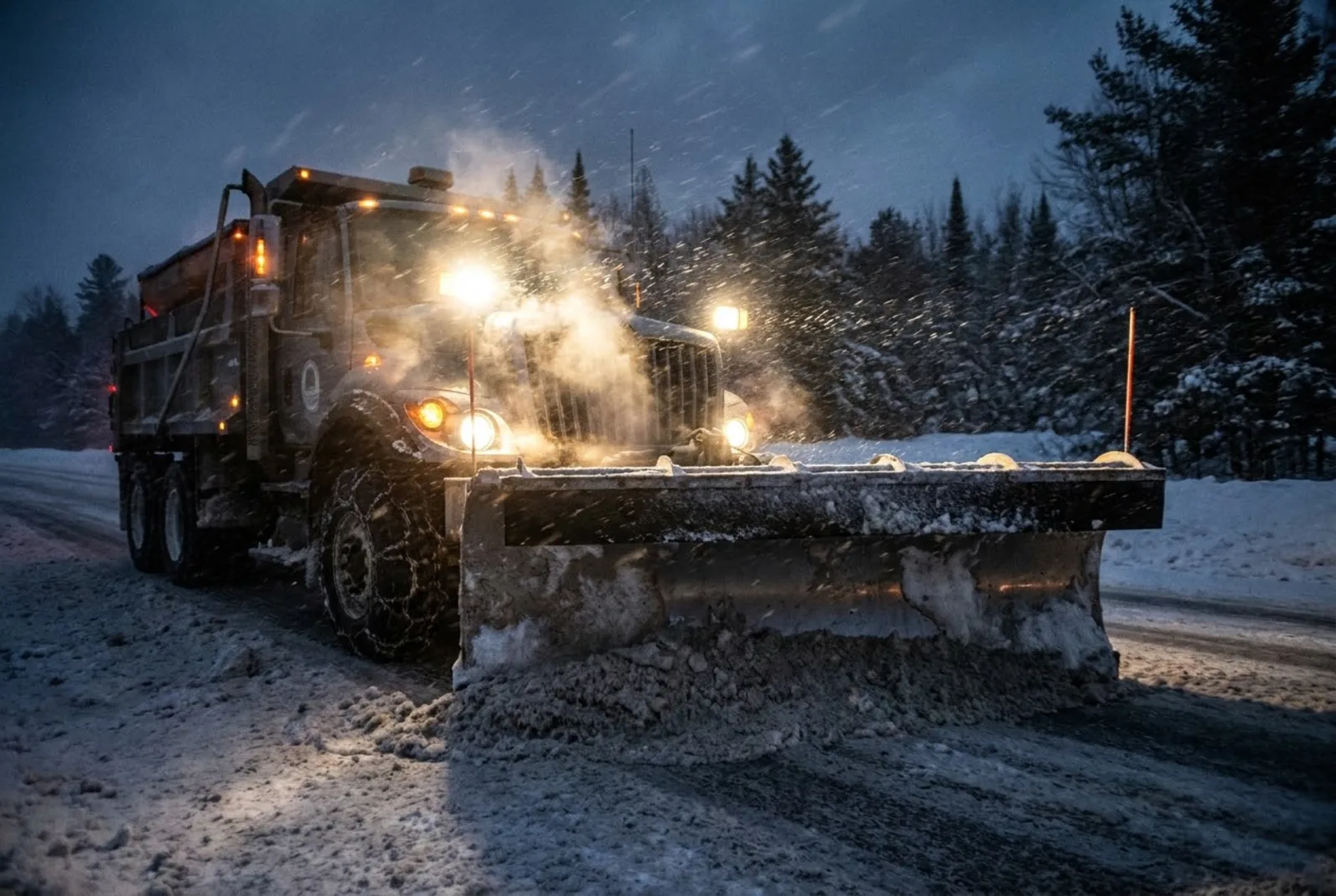
What Commercial Auto Covers for a Plow Fleet
Commercial auto covers the vehicles themselves and the harm they do. A personal auto policy will not respond to a truck used for commercial plowing — insurers exclude it explicitly, and finding out at claim time is the expensive way to learn.
- Liability — injury and property damage you cause with the truck, including while actively plowing
- Physical damage — collision and comprehensive on the truck, which in this trade means winter losses: sliding into a curb, backing into a dumpster, a rollover on an unsalted grade
- Attached equipment — the blade, the V-plow, the bed spreader, the brine tank; these are scheduled and valued, not automatically covered because they are bolted on
- Hired and non-owned auto — when a sub or an employee runs a route in a truck your business does not own or title
Plowing while in motion is its own question
Some auto forms treat a vehicle as unlicensed mobile equipment while actively plowing and push the claim to general liability; others keep it on the auto policy. The two policies must line up, or you get a claim that both carriers point at each other over. Which form you have is one of the first things we check.
What Drives Your Plow Truck Rate
Underwriters price this line on how your trucks are driven and by whom, far more than on the trucks themselves. The controllable factors are worth real money.
- Driver MVRs. Pull motor vehicle records before hiring, not after. A single seasonal hire with a recent DUI or a suspension can move the whole fleet rate.
- Radius of operation. Local routes price better than long hauls between distant sites. Tight, mapped routes read as a controlled operation.
- Hours of operation. Overnight work is priced in, but documented shift limits and fatigue rules push back against the assumption that your drivers are on hour nineteen.
- Telematics. GPS and dash cameras have moved from novelty to discount, and they win disputed claims — including the ones where the other driver says you never stopped.
- Loss history. Three winters of clean loss runs is the strongest argument for a lower rate that exists.
Seasonal Fleets and Off-Season Storage
Snow fleets are seasonal and your policy should reflect it. Trucks that sit from April to October do not need full road coverage the whole time, and a comprehensive-only storage endorsement keeps them protected against fire, theft and hail without paying for liability you are not using.
| Season | Typical structure | Why |
|---|---|---|
| Nov - Mar | Full liability + physical damage | Trucks are on the road in the worst conditions of the year |
| Apr - Oct | Comprehensive-only / storage | Parked assets still burn, get stolen and get hailed on |
| Year-round dual-use | Full coverage, landscaping classification | A truck that mows in summer is never really parked |
Be honest about dual use. A truck that plows in winter and tows a mower trailer in summer is a year-round commercial vehicle, and describing it as seasonal to save premium is the kind of misstatement that voids a claim in July.